Businesses are generating more data than ever, but having access to information does not automatically lead to better decisions. Teams still spend hours waiting for reports, navigating dashboards, and requesting help from data analysts to answer everyday business questions.
That is beginning to change.
Self-service analytics is evolving beyond traditional dashboards and drag-and-drop reporting. AI-powered platforms now allow users to ask questions in natural language, explore trends, generate visualizations, and uncover insights without needing advanced technical skills.
As organizations move toward 2027, the focus is shifting from simply making data accessible to making it understandable, trustworthy, and actionable.
So, which platforms are worth watching? Let’s explore some of the self-service analytics platforms shaping the future of business intelligence.
What Is Self-Service Analytics?
Self-service analytics enables business users to access, explore, analyze, and visualize organizational data without depending on technical teams for every reporting request.
Modern platforms combine interactive dashboards, natural language queries, AI-generated insights, and data visualization to simplify analysis.
For example, instead of asking an analyst to prepare a report, a business leader can simply ask:
“What were our highest-performing products this quarter?”
The platform can interpret the question, analyze the relevant data, and present the findings through visualizations and explanations.
Why Will Self-Service Analytics Matter in 2027?
The next phase of analytics will be shaped by accessibility, automation, and trust.
Organizations will increasingly look for platforms that offer:
- Conversational analytics: Ask questions using everyday language instead of writing SQL.
- AI-assisted discovery: Identify trends and explore relevant questions more easily.
- Governed self-service: Give employees access while maintaining permissions and data controls.
- Connected data: Analyze information across databases, warehouses, and business systems.
- Transparent insights: Understand the logic and data behind AI-generated answers.
The objective is simple: reduce the distance between asking a business question and making an informed decision.
Top Self-Service Analytics Platforms to Watch in 2027
The following platforms are worth evaluating based on their different approaches to business intelligence and self-service analytics. This is a curated shortlist, not a definitive performance ranking. The right choice depends on your organization’s data environment, users, governance requirements, and analytical needs.
Lumenn AI – For Natural Language Enterprise Analytics
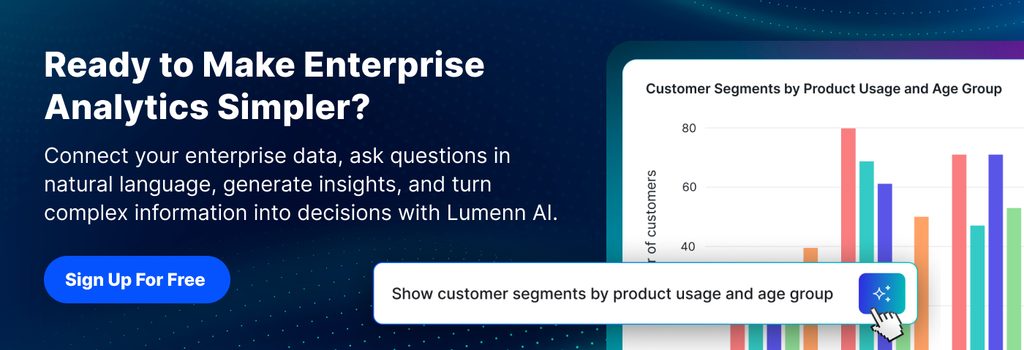
Lumenn AI brings a different approach to self-service analytics by making enterprise data exploration conversational.
As organizations look toward 2027, the ability to ask business questions directly, generate insights, and understand the logic behind AI-generated results is becoming increasingly important.
Lumenn AI is an AI-powered, no-code enterprise analytics platform that allows users to connect, query, validate, and visualize enterprise data without writing SQL.
Its capabilities include:
- Natural Language Analytics: Ask questions in everyday language and generate textual insights and visualizations.
- AI Auto Analyst: Discover relevant questions suggested from available datasets instead of starting every analysis from scratch.
- Data Source Integration: Connect platforms such as PostgreSQL, MySQL, Snowflake, Amazon Redshift, Google BigQuery, Azure SQL, AWS S3, and Azure Blob Storage.
- Data Quality: Identify nulls, duplicates, inconsistencies, schema mismatches, and anomalies.
- No-Code Dashboards: Pin visualizations, share insights, and configure automatic refresh intervals.
- SQL Refinery: View the SQL behind AI-generated insights and refine it using natural language before regenerating results.
- Chain of Thoughts: Access structured explanations of how questions are interpreted, which data sources and logic are used, and how insights are generated.
By bringing natural-language exploration, data quality, dashboards, and AI transparency together, Lumenn AI aims to make enterprise analytics more accessible without sacrificing control.
Best suited for: Organizations looking to simplify enterprise analytics and enable nontechnical teams to explore data using AI.
Microsoft Power BI – For Organizations in the Microsoft Ecosystem
Microsoft Power BI remains an important platform for organizations that rely on Microsoft technologies. It provides interactive dashboards, reporting, data modeling, and integration with the broader Microsoft environment.
Its AI capabilities, including Copilot experiences, are making data exploration more conversational. For organizations already using Microsoft Fabric and related services, Power BI is worth watching as AI becomes more integrated into analytics workflows.
Best suited for: Enterprises seeking connected reporting and business intelligence within the Microsoft ecosystem.

Tableau – For Advanced Data Visualization
Tableau is widely recognized for its visual analytics and interactive dashboards. It enables users to explore datasets, identify patterns, and communicate findings through visual storytelling.
With AI-assisted capabilities and Tableau Pulse, the platform is evolving beyond conventional dashboard experiences. It remains worth considering for organizations where visual exploration and analytical communication are priorities.
Best suited for: Teams that prioritize rich visualizations, interactive analysis, and data storytelling.

Google Looker – For Governed, Model-Driven Analytics
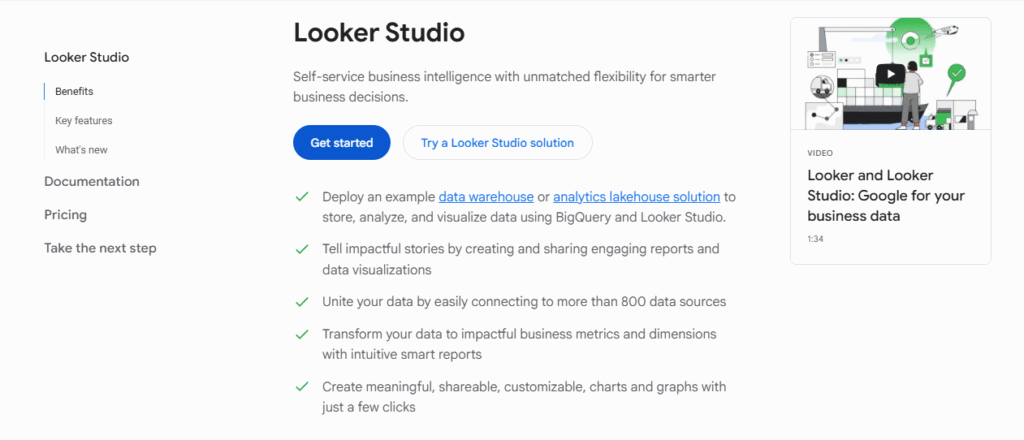
Google Looker focuses on governed business intelligence through its LookML modeling layer. It helps organizations define consistent business metrics and provide users with structured ways to explore enterprise data.
Its integration with Google Cloud and conversational analytics capabilities makes it relevant for businesses building analytics environments around cloud data warehouses.
Best suited for: Enterprises that prioritize centralized metric definitions, governed data exploration, and Google Cloud integration.
ThoughtSpot – For Search-Driven Analytics
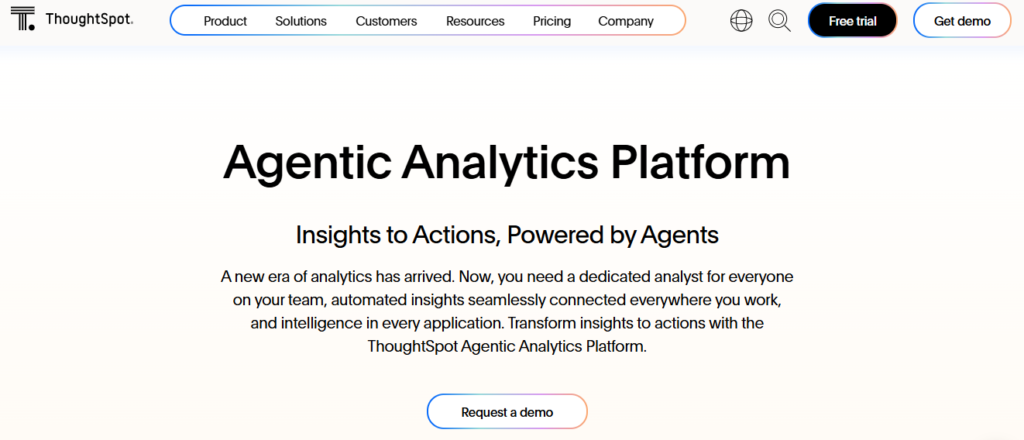
ThoughtSpot takes a search-oriented approach to analytics, allowing users to explore business data through natural-language questions. Its AI-powered Spotter experience extends this approach toward conversational and agent-assisted analysis.
Rather than relying exclusively on predefined dashboards, users can investigate questions and explore relevant insights more directly.
Best suited for: Organizations looking to make analytics accessible through search and conversational experiences.
Qlik Sense – For Associative Data Exploration
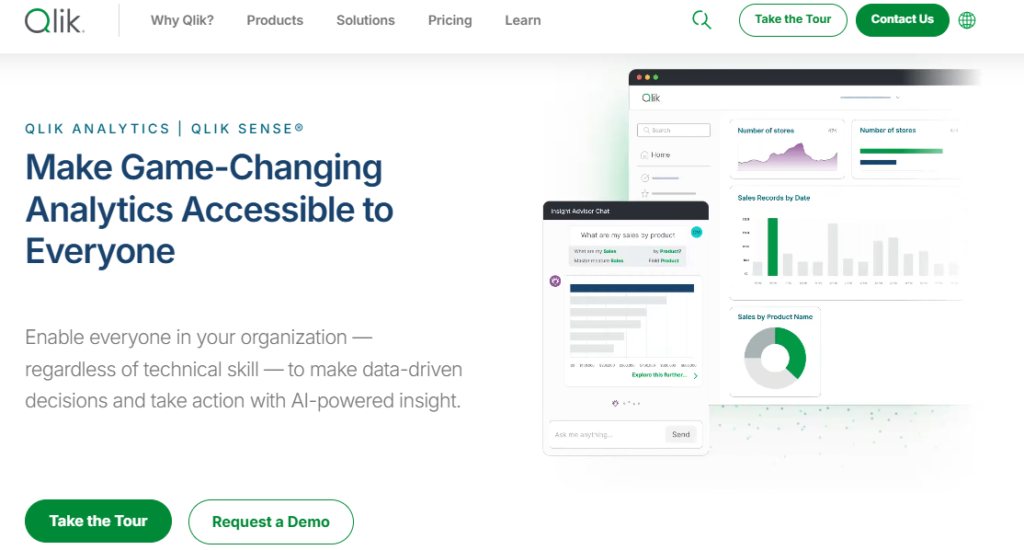
Qlik Sense is known for its associative analytics engine, which helps users explore relationships across datasets and investigate connections that may not be immediately obvious.
Its analytics and AI capabilities support interactive exploration, reporting, and data discovery across different business functions.
Best suited for: Organizations working with complex, connected datasets that need flexible analytical exploration.
Domo – For Connected Business Intelligence
Domo combines data connectivity, visualization, dashboards, and business intelligence capabilities in a cloud-based platform.
Its broad connector ecosystem and AI initiatives make it relevant for organizations looking to bring information from multiple business systems into a connected analytics environment.
Best suited for: Businesses that want an integrated cloud analytics environment with broad data connectivity.

How to Choose the Right Self-Service Analytics Platform
Choosing a platform should begin with business requirements, not a feature checklist.
Before making a decision, consider:
- Ease of use: Can nontechnical employees explore data independently?
- AI capabilities: Does the platform support natural-language queries and useful AI-generated insights?
- Data connectivity: Can it connect to your existing databases and cloud platforms?
- Governance: Does it support permissions, access controls, and consistent business definitions?
- Data quality: Can teams identify issues that may affect analytical results?
- Transparency: Can users understand and validate how AI-generated insights were produced?
- Scalability: Can the platform support more users, datasets, and business requirements as the organization grows?
The strongest platform is not necessarily the one with the most features. It is the one that fits your data environment and helps people make better decisions.
Frequently Asked Questions
What is the best self-service analytics platform for 2027?
There is no universal best platform. Lumenn AI, Power BI, Tableau, Looker, ThoughtSpot, Qlik, Sigma, Metabase, and Domo offer different approaches. The right choice depends on your organization’s requirements.
How is AI changing self-service analytics?
AI enables users to ask questions in natural language, generate visualizations, discover patterns, and explore data without manually building every query or report.
Can nontechnical employees use self-service analytics?
Yes. Modern no-code and conversational analytics platforms are designed to help business users explore enterprise data without advanced SQL or programming knowledge.
Is self-service analytics secure?
It can be when supported by appropriate access controls, permissions, encryption, governance, and monitoring. Organizations should evaluate these capabilities before deployment.
Does self-service analytics replace traditional BI?
No. It complements traditional BI by adding flexible, on-demand data exploration alongside established dashboards and standardized reporting.
Final Thoughts: The Future of Analytics Is About Asking Better Questions
As 2027 approaches, self-service analytics is becoming more than a convenient way to build reports. It represents a shift in how organizations interact with information.
The next generation of analytics will be shaped by AI-powered exploration, connected enterprise data, accessible interfaces, and greater transparency.
Businesses that make these capabilities available across their teams can reduce reporting bottlenecks and bring data closer to everyday decisions.
Because the real value of analytics isn’t simply knowing what happened. It is having the ability to ask why, explore what comes next, and act with confidence.